
Onion Pakoda Recipe
A basic onion pakoda recipe begins by mixing gram flour with thinly sliced onions, aromatic spices, and fresh herbs to create a medium-thick batter. Many people also call this crispy snack onion bhaji or kanda bhaji in different regions.
Next, shape small portions of the batter and deep fry them until golden and crunchy. These flavorful bhajis make a perfect tea time snack, especially when you serve them hot with chutney and a cup of tea.A basic onion pakoda recipe begins by mixing gram flour with thinly sliced onions, aromatic spices, and fresh herbs to create a medium-thick batter. Many people also call this crispy snack onion bhaji or kanda bhaji in different regions.
If you like a softer and lighter texture, you can add a pinch of baking soda. I usually skip it to keep the onion pakoda extra crispy, but you can adjust it to your taste.
Across Indian cuisine, people prepare this delicious snack in many different ways. The choice of spices and herbs changes the taste, texture, and flavor. Many also call it onion bhaji or kanda bhaji, and people love serving it as a crunchy tea time snack or evening treat. These crispy bhajis pair perfectly with hot tea and green chutney.
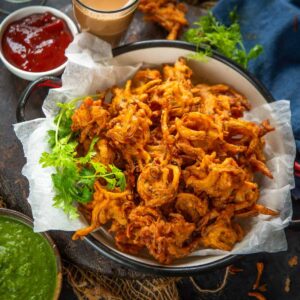
This onion pakora recipe follows a classic recipe from the North Indian Punjabi style. I use fewer spices and keep it mild so that the natural sweetness of the onion comes out clearly. This simple method helps you make perfectly crunchy onion pakoras every time.
In many onion pakora or onion bhaji recipes, various spices and herbs are added to enhance the flavor during cooking. In this version, I add ajwain, which improves digestion and gives the onion pakora a pungent aroma. This aromatic spice makes the bhajis incredibly tasty and satisfying. In different parts of India, people also call this snack kanda bhaji.
Sometimes, I mix in a pinch of asafoetida (asafoetida) to add an extra depth of flavor. When you fry the batter, the onions get slightly caramelized and turn golden brown. The outside gets crunchy, while the inside remains soft and fluffy. This perfect texture makes every bite of onion pakora or onion bhaji absolutely irresistible.
At home, we enjoy hot and crunchy kanda bhaji, especially during the rainy season and winter evenings. Fresh bhaji is one of the most favorite snack options in Indian households during tea time.
Serve your onion pakora with savory dips like salty roasted green chillies and green chutney or sweet tamarind chutney. Pair this crunchy tea time snack with a cup of spicy Indian spiced tea for a complete and comforting evening.
You can use any type of onion to make this dish – be it red onion or white onion.
Slice the onion thinly so that it is crunchy. I always use a kitchen knife to slice the onion thinly. You can also use anything other than a knife. I have added a link below to another recipe that you can eat during rainy days or with evening tea.
How To Make French Fries Recipe – Crispy & Perfect Homemade Fries
How to make Onion Pakora
Slice & Marinate Onions
1. Slice 2 medium to large onions evenly and thinly and put in mixing bowl. Add 1 to 2 teaspoons chopped green chilies.
If you do not have green chilies, then add ½ teaspoon red chili powder. You can also add chopped coriander leaves or mint leaves, if you like.
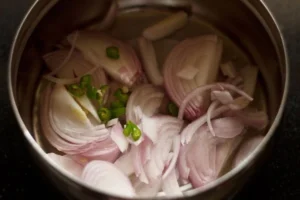
2. Add spices – 1 teaspoon of jowar, 1/4 teaspoon of turmeric powder, 1 pinch of asafoetida and salt as required.
Asafoetida is optional you can use it or not.
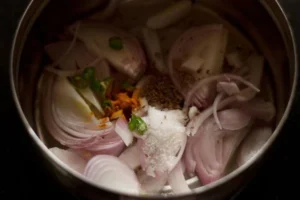
3. Mix everything well. Cover and keep the mixture aside to marinate for 15 to 20 minutes
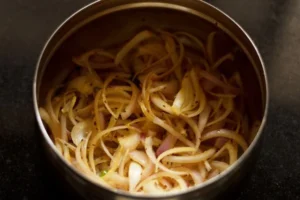
4. The onions will release its juices when mixed with salt.
After resting the mixture for 15 to 20 minutes, when the onions release its juices, then you can add the gram flour (besan) as shown in the following step.
Make Gram Flour Batter
5. Add 1 cup gram flour or besan.
For a soft and light texture in the pakoda, you can add 1 pinch baking soda. Adding baking soda is optional.
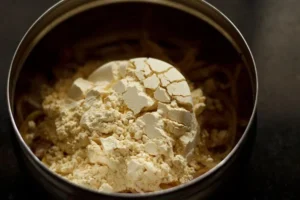
6. Add the required amount of water to make a medium thick batter so that there are no lumps.
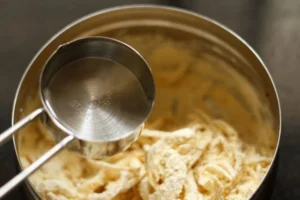
7. Stir the mixture very well with a spoon or by hand. The batter is ready to fry. You can fry it once and then deep fry it again.
First check that the batter is of medium consistency. The batter should not be too thick; it will make the pakoras full of flour and dense.
If the batter is thin and runny, the pakoras will spill and burst during frying and will absorb a lot of oil.
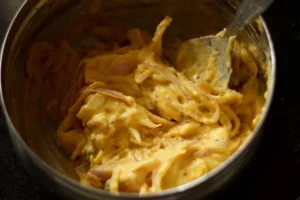
Make Onion Pakoras
8. Heat oil in a pan as required for deep frying. Let the oil heat up to medium. In the hot oil, gently and carefully, spoon the batter into the hot oil or use your hands to add it.
Fry the pakoras on medium flame. You can adjust the heat as per your requirement while frying.
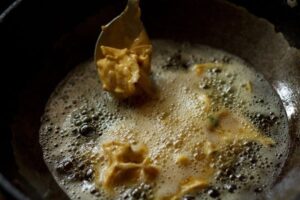
9. Depending on the size of the pan, you can add more or less. Just make sure there is no excess batter in the pan while frying.
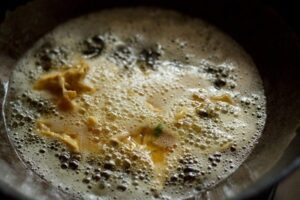
10. When the pakoras are cooked a little and the batter is firm and slightly crunchy, flip them with a slotted spoon and continue frying.
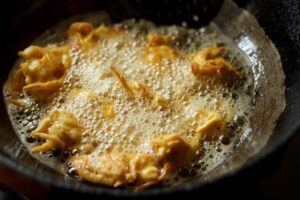
11. You will have to turn the pakoda a few times for even frying.
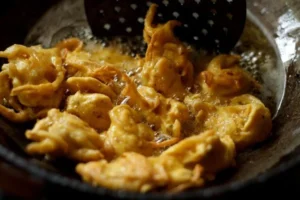
12. Fry the pakoras until they are crispy and golden.
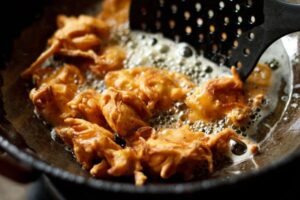
13. Remove the fried onion pakoras with a slotted spoon and place them on kitchen paper towels to absorb excess oil.
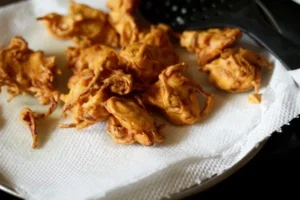
14. Serve onion pakoras with coriander chutney, mint chutney or tomato ketchup.
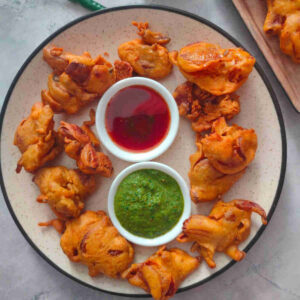
Serving Suggestions
Onion Pakora is a tea time snack and can be served with green chutney or dipping sauce and some roasted and salted green chillies. You can also add this snack to your tea or coffee.
Many people also like to have it with roti at dinner.
Onion Pakora, roti and some coriander chutney are their favorite combination. At my house, I serve them plain as an evening snack with just chutney or dipping sauce.
Step by step photo instructions above
Onion Pakora Recipe
Onion Pakora is a deep fried dish made with lots of thinly sliced onions, gram flour, carom seeds and some spices. This recipe is a classic Punjabi style version that is delicious, crunchy and tastes best with coriander chutney, mint chutney or ketchup.
Ingredients
- 2 onions – medium to large-sized
- 1 cup gram flour (besan) or substitute with chickpea flour
- 1 to 2 teaspoons green chillies – chopped (or add instead ½ teaspoon red chilli powder or cayenne pepper)
- 1 to 2 tablespoons coriander leaves – chopped (cilantro), optional
- ½ teaspoon garam masala – optional
- ¼ teaspoon turmeric powder (ground turmeric), optional
- 1 teaspoon carom seeds (ajwain)
- 1 generous pinch asafoetida (hing) – optional or use gluten-free asafoetida
- 1 pinch baking soda – optional
- water as needed to make a medium-thick batter
- salt as required
- oil as required – for shallow frying or deep frying. sunflower oil or any neutral flavored oil
Instructions
Marinating Onion Chops
Thinly chop the onion and take it in a mixing bowl. Also, add chopped green chillies.
If you don’t have green chillies, add red chilli powder. You can also add coriander leaves or mint leaves if you want.
Add spices – carom seeds, turmeric powder, asafoetida and salt.
Mix everything well and marinate. Cover the onion, chilli and spice mixture and keep it aside for 15 to 20 minutes.
Meanwhile, the water will come out of the onion after leaving the mixture for 15 to 20 minutes.Making Pakora Batta
Then add gram flour (besan). If you plan to add baking soda, add it at this stage.
Add required amount of water to make a medium-thick batter. Do not make a very thick batter or a thin liquid batter.
Stir the entire mixture very well with a spoon or with your hands. The batter is ready to fry.Make sure there are no lumps of besan in the batter.
Making the Onion Pakoras
Heat the oil for deep frying in a kadai or pan. Let the oil heat to medium.
Add spoonfuls of batter to the hot oil.
Depending on the size of the kadai or pan, you can add more or less. Do not overcrowd the pan while frying.
Once the pakoras are cooked and the batter is firm or lightly golden, flip them with a slotted spoon and continue frying.
You will need to flip them a few times to fry them.
Fry until crispy and golden.
Remove with a slotted spoon and place on a kitchen paper towel to absorb the excess oil.
Serve the onion pakoras with coriander chutney or tomato ketchup.